 delishing
How to Cook Plantains: Sweet and Savory Methods

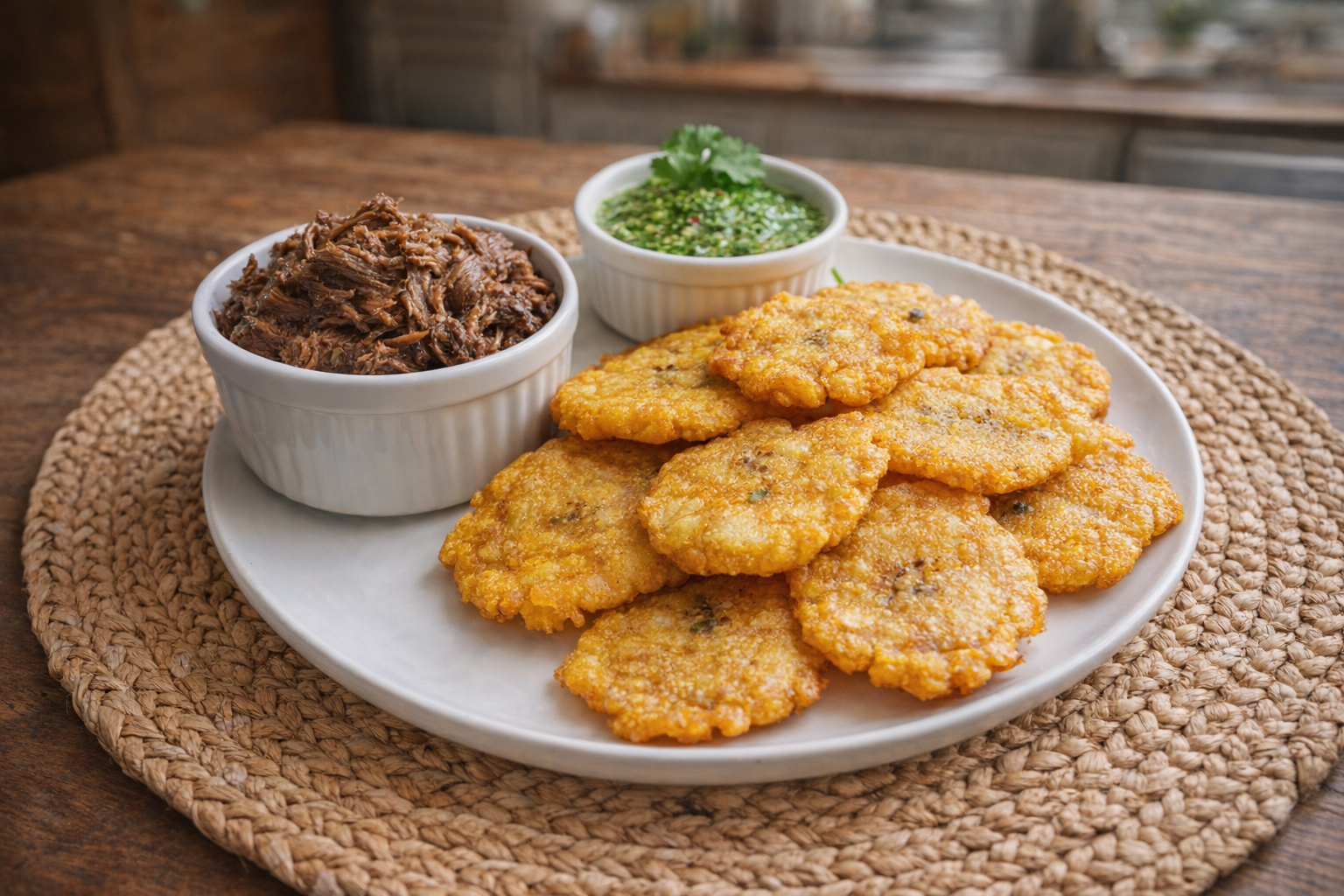
Plantains, often mistaken for their sweeter banana cousins, offer a unique starchy canvas for both sweet and savory culinary explorations. Their mild flavor intensifies when cooked, transforming into a delightful caramelized sweetness or a satisfyingly crisp foundation for savory dishes. Mastering the art of cooking plantains opens a world of Caribbean, African, and Latin American-inspired flavors right in your kitchen.
Plantains are a delicious and versatile fruit that can be cooked in so many ways. Whether you prefer them fried, baked, or caramelized, plantains are a great option for those looking to add a healthy and delicious twist to their diet.
Understanding Plantains
Plantains are a member of the banana family, but they are starchier and less sweet than bananas. They are typically used in savory dishes, but they can also be used in sweet dishes when they are very ripe.
- Green Plantains: These are unripe and very starchy. They are best for savory dishes like tostones or plantain chips. The flesh will be firm and almost white.
- Yellow Plantains: As plantains ripen, they turn yellow and become slightly sweeter. They are good for frying or baking. The flesh will be softer and slightly yellow.
- Black Plantains: These are very ripe and very sweet. They are best for caramelized plantains or desserts. The flesh will be soft and dark yellow, almost orange.
What to Buy: When purchasing plantains, consider your intended use. For savory dishes, choose green or yellow plantains. For sweet dishes, choose yellow or black plantains. Look for plantains that are firm and free of bruises. Avoid plantains that are too soft or have signs of mold.
Why Cook Plantains This Way?
- Versatility: Plantains can be prepared in countless ways, from simple fried snacks to complex dishes.
- Flavor: Their subtle sweetness and starchy texture complement a wide range of flavors, both sweet and savory.
- Convenience: Plantains are readily available in most grocery stores and are relatively inexpensive.
Preparation (Mise en Place)
Before you begin cooking, it's important to properly prepare your plantains.
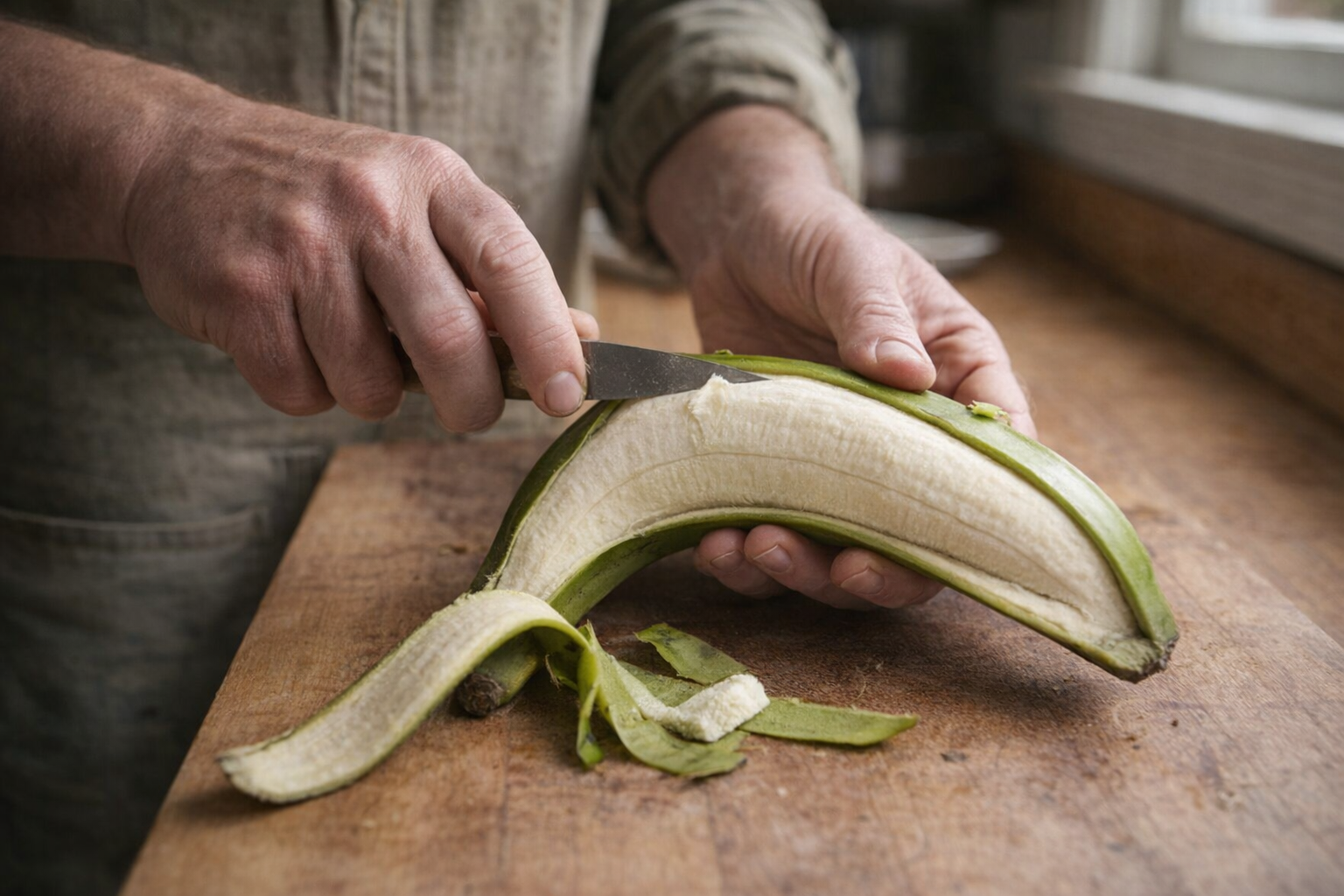
- Peeling: Cut off both ends of the plantain. Make a shallow slit lengthwise along the peel, being careful not to cut into the flesh. Use your fingers or a knife to pry the peel away from the plantain. Ripe plantains are easier to peel than green plantains.
- Cutting: Depending on the recipe, you may need to slice the plantains into rounds, strips, or cubes. For tostones, cut into thick rounds. For maduros (sweet fried plantains), slice diagonally.
- Thawing (if frozen): If using frozen plantains, thaw them completely before cooking. Pat them dry with paper towels to remove excess moisture. This will help them crisp up better when frying.
Essential Tools
- Large Skillet: A cast iron skillet is ideal for even heat distribution, but any large skillet will work.
- Tongs or Spatula: For flipping and removing plantains from the pan.
- Cutting Board and Knife: For preparing the plantains.
- Paper Towels: For draining excess oil.
The Cooking Method(s)
Here we'll explore two popular methods for cooking plantains: frying them for a sweet treat (Maduros) and frying them for a savory snack (Tostones).
Method 1: Sweet Fried Plantains (Maduros)
Ingredients:
- 2 ripe plantains (yellow or black), peeled
- 2 tablespoons vegetable oil
- Pinch of salt (optional)
- Slice the Plantains: Slice the plantains diagonally into ½-inch thick slices.
- Heat the Oil: Heat the vegetable oil in a large skillet over medium heat. The oil should be hot enough to sizzle when a plantain slice is added.
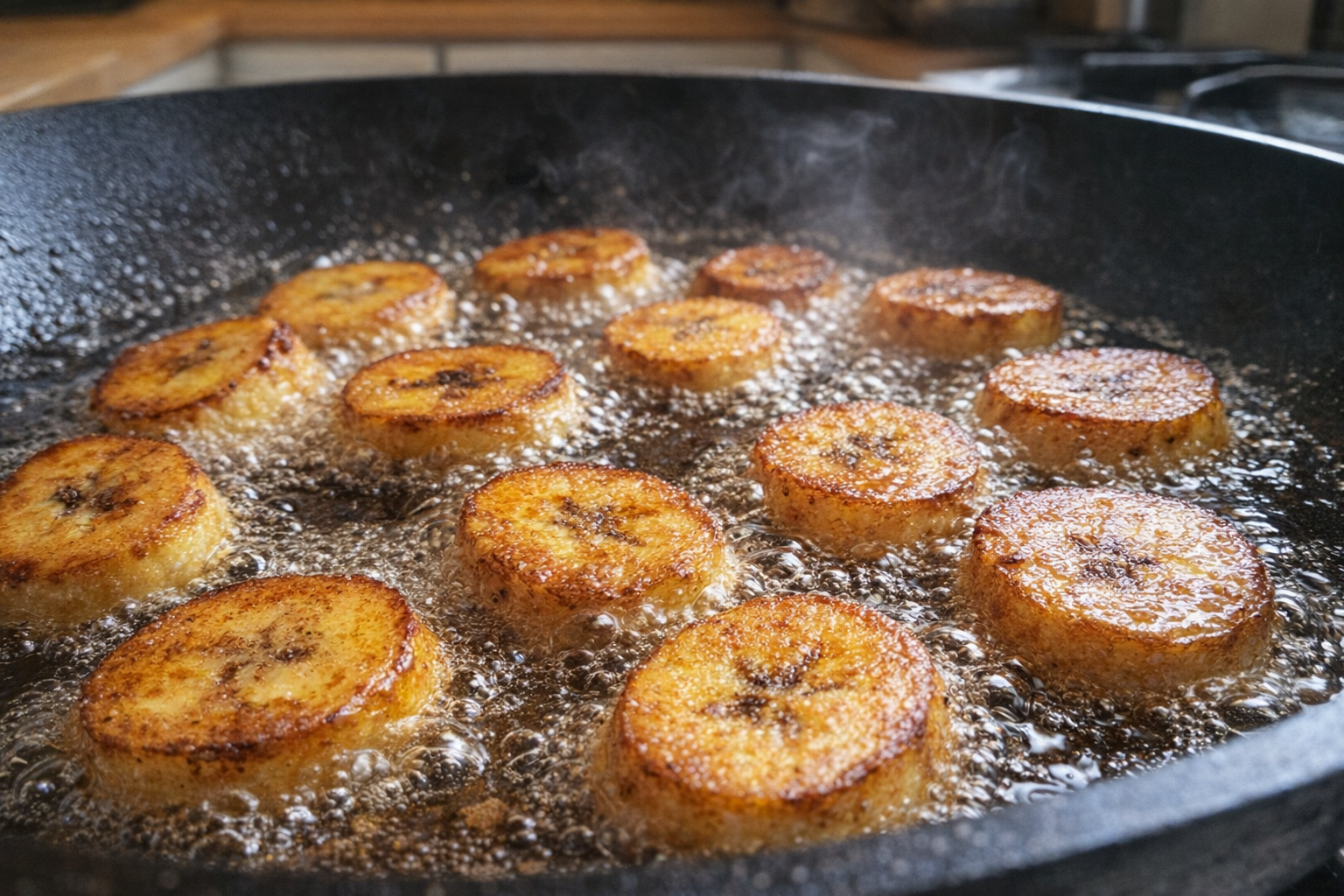
- Fry the Plantains: Carefully place the plantain slices in the hot oil, being careful not to overcrowd the pan. Fry for 3-4 minutes per side, until golden brown and caramelized. As they cook, the kitchen will fill with a sweet, almost candy-like aroma.
- Drain and Serve: Remove the plantains from the skillet and place them on a paper towel-lined plate to drain excess oil. Sprinkle with a pinch of salt, if desired. Serve warm.
Method 2: Savory Fried Plantains (Tostones)
Ingredients:
- 2 green plantains, peeled
- 2 cups vegetable oil, for frying
- Salt to taste
- First Fry: Cut the plantains into 1-inch thick rounds. Fry the plantain rounds in hot oil over medium heat for 2-3 minutes per side, until lightly golden. They will be soft but not crispy.
- Smash: Remove the plantains from the oil and place them on a cutting board. Use a plantain press (tostonera) or the bottom of a glass to flatten each round into a ½-inch thick disk.
- Second Fry: Return the flattened plantains to the hot oil and fry for another 2-3 minutes per side, until golden brown and crispy. The second fry is what gives tostones their characteristic crispy texture.
- Drain and Season: Remove the tostones from the oil and place them on a paper towel-lined plate to drain excess oil. Sprinkle with salt to taste. Serve immediately.
Cooking Time & Doneness Guide
- Maduros: Total cooking time is approximately 6-8 minutes. The plantains are done when they are golden brown and caramelized. The internal temperature is not critical.
Visual Cues
The plantains should be soft and easily pierced with a fork. The edges should be slightly crispy and the color a deep golden brown.
Visual Cues
The tostones should be firm and easily hold their shape. They should be a deep golden brown color.
Tips for Perfection
- Don't Overcrowd the Pan: Fry the plantains in batches to avoid overcrowding the pan, which will lower the oil temperature and result in soggy plantains.
- Use the Right Type of Plantain: For maduros, use ripe (yellow or black) plantains. For tostones, use green plantains.
- Control the Heat: Adjust the heat as needed to prevent the plantains from burning. The oil should be hot enough to sizzle, but not so hot that the plantains brown too quickly.
- Smash Tostones Evenly: Make sure to smash the tostones evenly to ensure they cook evenly.
Storage & Reheating
- Storage: Store leftover maduros or tostones in an airtight container in the refrigerator for up to 3 days.
- Reheating: Reheat maduros in a skillet over medium heat or in the microwave. Reheat tostones in a skillet over medium heat or in a toaster oven to restore their crispness. Avoid reheating in the microwave, as they will become soggy.
Serving Suggestions
- Maduros: Serve as a side dish with rice and beans, grilled chicken, or pork. They can also be enjoyed as a dessert with a dollop of whipped cream or ice cream.
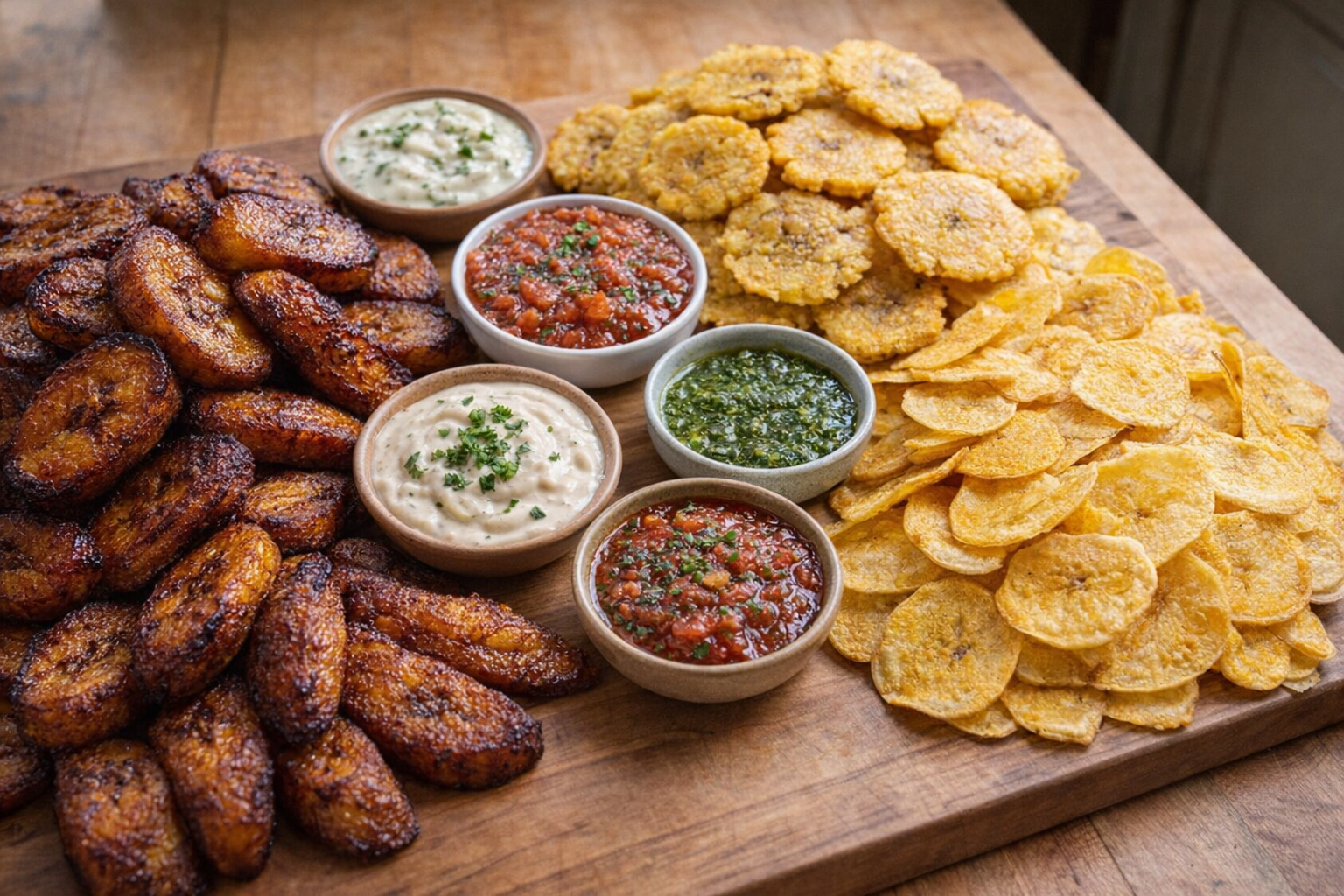
- Tostones: Serve as an appetizer with guacamole, salsa, or a dipping sauce like mojo (garlic sauce). They can also be served as a side dish with rice and beans or as a base for toppings like shredded chicken or pork.
- Plantain Salad: Dice cooked plantains and toss them with fresh vegetables and a tangy vinaigrette for a refreshing salad.
- Jibarito Sandwich: Use flattened, fried plantain slices as the "bread" for a flavorful sandwich with steak, chicken, or pork.
💡 Pro Tips
- For savory tostones, choose green plantains with firm skin to ensure they hold their shape during the double-frying process.
- Wait until the plantain skin is almost entirely black to achieve the best caramelization and natural sweetness for sweet maduros.
- After the first light fry, use a flat-bottomed glass or a specialized tostonera to smash the green plantain rounds before frying them again for maximum crispiness.
- To peel a green plantain easily, cut off the ends and make shallow vertical slits along the ridges of the skin before prying it off with your thumb.
- Fry ripe plantain slices over medium heat rather than high heat to prevent the high sugar content from burning before the centers soften.
Frequently Asked Questions
Green plantains are notoriously difficult to peel. Try soaking them in warm water for about 10-15 minutes before peeling, which can help soften the skin. You can also lightly score the skin in several places lengthwise to make it easier to remove.
Yes, baking is a great way to enjoy plantains with less oil! Simply peel and slice the plantains, toss them lightly with a little oil and your desired seasonings, and bake at 375°F (190°C) until tender and slightly caramelized, flipping halfway through.
Leftover cooked plantains should be stored in an airtight container in the refrigerator. They are best consumed within 2-3 days. Reheat them in a skillet or microwave until warmed through.
While there isn't a perfect substitute for the unique flavor and texture of plantains, depending on the recipe, you could try using green bananas for savory dishes or sweet potatoes for sweet dishes. Keep in mind that the cooking time and flavor profile will differ slightly.